Transistor PN2907A PNP 60V / 0.8A
Product information:
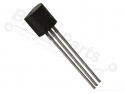
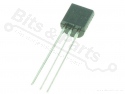
The PN2907A is a PNP switching transistor that is often used for switching and amplifying applications in electronic circuits. This transistor is packaged in a TO-92 package, which makes it easy to integrate onto printed circuit boards and into circuits. Some key specifications of the PN2907A are:
Maximum collector current: -100 mA
Maximum power dissipation: 500 mW
High Current Gain (hFE): Typically between 100 and 300
The PN2907A is suitable for various applications, such as switching and linear amplification
What Does a PNP Transistor Do?
A PNP transistor is a type of bipolar transistor that operates by applying a small current or voltage between the base and the emitter to control a much larger current between the emitter and the collector. The key feature of a PNP transistor is that current flows from the emitter to the collector (unlike an NPN transistor, where current flows from the collector to the emitter).
What a PNP transistor does:
Switching: If the base of the PNP transistor is lower than the emitter (more negative), the transistor turns 'on,' allowing current to flow from the emitter to the collector. This is used to switch current circuits.
Amplifying: Similar to an NPN transistor, a PNP transistor can use a small input current (base current) to control a larger current through the collector. This makes it a useful amplifier for signals.
The base current of a PNP transistor must be negative relative to the emitter to turn the transistor on, meaning the circuit and polarity diagram are often reversed compared to an NPN transistor.
In summary: A PNP transistor allows current to flow from the emitter to the collector if the base has a lower voltage than the emitter.







 >
>






 Shipping costs Netherlands