

Relays & Relay boards
Het omzetten van een kleine elektrische input in een hoogvermogen output is geen sinecure, maar deze taak is noodzakelijk om een breed scala aan standaardapparaten en voertuigen efficiënt te laten werken. Veel circuits bereiken deze conversies door het gebruik van relais, die onmisbaar zijn in allerlei elektronische apparatuur.
Bits & Parts heeft relais en relaisboards voor alle toepassingen. De meeste relais zijn aan te sturen vanuit een microcontroller zoals een ESP32, Arduino en Raspberry Pi.
-
2-Channel Solid State Relay Module
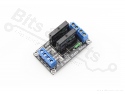 Compares with the traditional mechanical relay, the Solid State Relay (SSR) has many advantages: it has a longer life, with a much higher turn on/off speed and no noise. Besides, it also has better resistance to vibration and mechanical shock, and better moisture proof performance.
This Solid State Relay Module has two channels, which work and b... In stock -
Automatic temperature controller (relay)
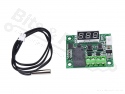 Simple temperature control for switching a device on/off using a relay. With a waterproof temperature sensor.
Temperature Range: -50°C ~ 110°C
Resolution: 0.1°C (-9.9 ~ 99.9°C), 1°C (other ranges)
Accuracy: 0.1°C
Refresh rate: 0.5 sec
High temperature protection: 0 ~ 110℃
Input voltage: 12VDC
Static current: ≤35mA, attraction current: �... In stock -
Automatic temperature controller W3230 with display 12VDC (relay)
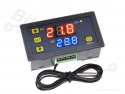 Automatic W3230 built-in temperature controller with a 12 volt DC power supply.
The display shows the current (PV) and set (SV) temperature values. The OUT light indicates whether the relay is switched on.
Temperature range: -50°C - 120°C
Resolution: 0.1°C (at -9.9°C - 99.9°C) - 1°C (at other values).
Accuracy: 0.1°C
Hysteresis accuracy: ... -
Automatic temperature controller W3230 with display 230VAC (relay)
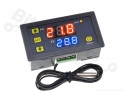 Automatic W3230 built-in temperature controller with a 230V AC power supply.
The display shows the current (PV) and set (SV) temperature values. The OUT light indicates whether the relay is switched on.
Temperature range: -50°C - 120°C
Resolution: 0.1°C (at -9.9°C - 99.9°C) - 1°C (at other values).
Accuracy: 0.1°C
Hysteresis accuracy: 0.1... In stock -
Automatic temperature controller W3230 with display 24VDC (relay)
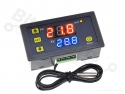 Automatic W3230 built-in temperature controller with a 24 volt DC power supply.
The display shows the current (PV) and set (SV) temperature values. The OUT light indicates whether the relay is switched on.
Temperature range: -50°C - 120°C
Resolution: 0.1°C (at -9.9°C - 99.9°C) - 1°C (at other values).
Accuracy: 0.1°C
Hysteresis accuracy: ... In stock -
Optocoupler board PC817 2-channel
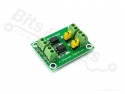 Optocoupler board with 2 optocouplers to keep the switching of e.g. relays optically separated from the rest of the circuit.
Voltage at the inputs for switching: 3.3V to 24V.
Voltage that can be connected to the outputs: 3.3V to 30V.
Dimensions: ~38mm x 29mm
In stock -
Optocoupler board PC817 4-channel
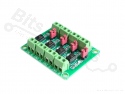 Optocoupler board with 4 optocouplers to keep the switching of e.g. relays optically separated from the rest of the circuit.
Voltage at the inputs for switching: 3.3V to 24V.
Voltage that can be connected to the outputs: 3.3V to 30V.
Dimensions: ~47.3mm x 37.7mm
In stock -
Optocoupler board PC817 8-channel
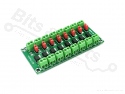 Optocoupler board with 8 optocouplers to keep the switching of e.g. relays optically separated from the rest of the circuit.
Voltage at the inputs for switching: 3.3V to 24V.
Voltage that can be connected to the outputs: 3.3V to 30V.
Dimensions: ~47.3mm x 37.7mm
In stock -
Relay - Solid state relay 3-32V / 10A / 44-440VAC - QLT POWER SSR-1048ZD3
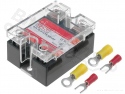 A solid state relay (SSR) allows a high-amperage AC load to be switched with a low-voltage DC drive circuit.
Solid state relays have several advantages over mechanical relays. One of these advantages is the ability to switch at a much longer voltage and lower current than most mechanical relays.
In addition, an SSR has no moving parts and can shift... In stock -
Relay - Solid state relay 3-32V / 40A / 24-380VAC
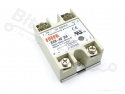 A solid state relay (SSR) allows a high-amperage AC load to be switched with a low-voltage DC drive circuit.
Solid state relays have several advantages over mechanical relays. One of these advantages is the ability to switch at a much longer voltage and lower current than most mechanical relays.
In addition, an SSR has no moving parts and can shift... In stock -
Relay - Solid state relay 3-32V / 40A / 24-380VAC Cover plate
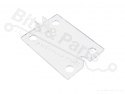 Plastic cover plate for the solid state relay 3-32V / 40A / 24-380VAC.
In stock -
Relay 12V / 8A DPDT Schrack RT424012
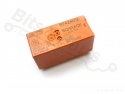 DPDT; 12VDC; 8A/250VAC; 8A/30VDC; 8A
Relay type: electromagnetic
Contacts configuration: DPDT
Rated coil voltage: 12V DC
AC contacts rating
(at resistance load): 8 A / 250 VAC
DC contacts rating
(at resistance load): 8 A / 30 VDC
Contact current max.: 8A
Switched voltage: max 400V AC, max 300V DC
Relay variant: miniature
Mounting: PCB
Coil resista... In stock -
Relay 12V 10A 250VAC / 10A 30VDC - Huike HK3FF-DC12V-SHG
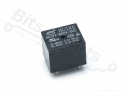 (5V version shown.)
In stock
(5V version shown.)
In stock
-
Relay 5V 10A 250VAC / 10A 30VDC - Huike HK3FF-DC5V-SHG
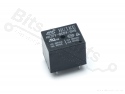 In stock
-
Relay 6V 10A 250VAC / 10A 28VDC
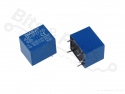 In stock
-
Relay 9V 10A 250VAC / 10A 30VDC - Huike HK3FF-DC9V-SHG
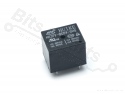 (5V version shown.)
In stock
(5V version shown.)
In stock
-
Relay bi-stable subminiature / Latching 1 coil 5V Zettler AZ850P1-5
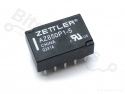 DPDT; 5VDC; 0.5A/125VAC; 1A/30VDC
Relay type: electromagnetic
Contacts configuration: DPDT
Rated coil voltage: 5V DC
AC contacts rating
(at resistance load): 0.5 A / 125 VAC
DC contacts rating
(at resistance load): 1 A / 30 VDC
Contact current max.: 1A
Switched voltage: max 220V DC, max 250V AC
Relay variant: bistable, subminiature
Mounting: PCB
C... In stock -
Relay bi-stable subminiature / Latching 2 coils 5V Zettler AZ850P2-5
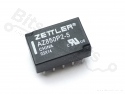 DPDT; 5VDC; 0.5A/125VAC; 1A/30VDC
Relay type: electromagnetic
Contacts configuration: DPDT
Rated coil voltage: 5V DC
AC contacts rating
(at resistance load): 0.5 A / 125 VAC
DC contacts rating
(at resistance load): 1 A / 30 VDC
Contact current max.: 1A
Switched voltage: max 220V DC, max 250V AC
Relay variant: bistable, subminiature
Mounting: PCB
C... In stock -
Relay board 1-channel 12V
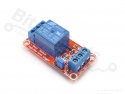 Easily control a 12V relay from a microcontroller (Arduino).
With LEDs indicating the status of the relays.
Equipped with optocouplers, which electrically separate your microcontroller from the relay.
With convenient screw terminals for connecting the device to be switched.
The relay has a normally open and a normally closed contact.
A jumper is pr... In stock -
Relay board 1-channel 12V bistable / toggle
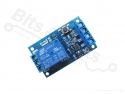 The microswitch on the board or an external switch (or microprocessor) allows you to switch the relay on and off (toggle).
If you press the microswitch, the relay will be energized. If you press it again, the relay will be released.
With onboard LED and connection for an external LED indicating the status of the relay.
Connections: (see last imag... In stock -
Relay board 1-channel 5V
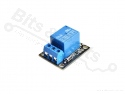 Easily control a 5V relay from a microcontroller (Arduino).
With LED indicating the status of the relay.
With convenient screw terminals for connecting the device to be switched.
The relay has a normally open and a normally closed contact.
Drive current: 15-20mA
Voltage Vcc: 5V
Switching of alternating current (max. 230V) and direct current (max.... In stock -
Relay board 1-channel 5V - Solid state relay
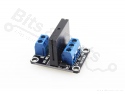 Compared to traditional relays, Solid State Relay (SSR) has many advantages: it has a longer lifespan, a higher on/off switching speed and no noise. In addition, it is better protected against vibrations and mechanical shocks and is more suitable for humid environments.
This Solid State Relay Module has two channels, which can be controlled and op... In stock -
Relay board 1-channel 5V - optocoupled
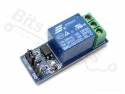 Easily control a 5V relay from a microcontroller (Arduino).
With LEDs indicating the status of the relays.
Equipped with optocouplers, which electrically separate your microcontroller from the relay.
With convenient screw terminals for connecting the device to be switched.
The relay has a normally open and a normally closed contact.
A jumper is pro... In stock -
Relay board 1-channel 5V for ESP8266/ESP01/ESP01S WiFi module
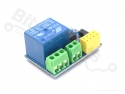 Relay board for an ESP8266 WiFi module. With the GPIO0 pin of the ESP8266 you can switch the relay on and off.
- With normally-open and normally-closed contact.
- 30VDC or 250VAC switching up to 10A.
- VCC: 5VDC - 12VDC.
Supplied without the ESP8266 (see additional items).
See the link below for a programming example. In stock -
Relay board 16-channel 5V - optocoupled
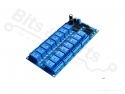 Easily control 16 relays from a microcontroller (Arduino) with 5V.
With LEDs indicating the status of the relays.
Equipped with optocouplers, which electrically separate your microcontroller from the relay.
With convenient screw terminals for connecting the device to be switched.
Each relay has a normally open and a normally closed contact.
A jumpe... In stock -
Relay board 2-channel 5V - optocoupled
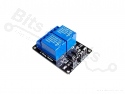 Easily control 2 relays from a microcontroller (e.g. an Arduino or Raspberry Pi) with 5V.
With LEDs indicating the status of the relays.
Equipped with optocouplers, which electrically separate your microcontroller from the relay.
With convenient screw terminals for connecting the device to be switched.
Each relay has a normally open and a normally ... In stock -
Relay board 4-channel 5V - Solid state relay
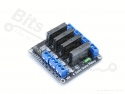 Compared to traditional relays, Solid State Relay (SSR) has many advantages: it has a longer lifespan, a higher on/off switching speed and no noise. In addition, it is better protected against vibrations and mechanical shocks and is more suitable for humid environments.
This Solid State Relay Module has two channels, which can be controlled and op... In stock -
Relay board 4-channel 5V - optocoupled
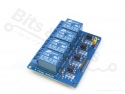 Easily control 4 relays from a microcontroller (Arduino) with 5V.
With LEDs indicating the status of the relays.
Equipped with optocouplers, which electrically separate your microcontroller from the relay.
With convenient screw terminals for connecting the device to be switched.
Each relay has a normally open and a normally closed contact.
A jumper... In stock -
Relay board 8-channel 5V - Solid state relay
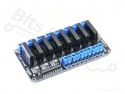 Compared to traditional relays, Solid State Relay (SSR) has many advantages: it has a longer lifespan, a higher on/off switching speed and no noise. In addition, it is better protected against vibrations and mechanical shocks and is more suitable for humid environments.
This Solid State Relay Module has two channels, which can be controlled and op... In stock -
Relay board 8-channel 5V - optocoupled
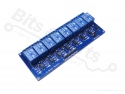 Easily control 8 relays from a microcontroller (Arduino) with 5V.
With LEDs indicating the status of the relays.
Equipped with optocouplers, which electrically separate your microcontroller from the relay.
With convenient screw terminals for connecting the device to be switched.
Each relay has a normally open and a normally closed contact.
A jumper... In stock -
Relay board with light sensor XH-M131 12V
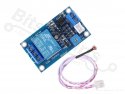 This module is designed for automatic switching of electrical devices based on light intensity. The light sensitivity is adjustable via a potentiometer. Ideal for applications such as automatic lighting or day/night controlled switching.
Features:
- Input voltage: DC 12V (with reverse polarity protection)
- Relay switching capacity:
- AC: 0–12... In stock -
Relay shield for Arduino
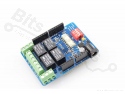 The Relay Shield v1.3 is an Arduino-compatible smart module with four mechanical relays that provides a simple way to control high voltage. Its maximum switching power is 35VDC (70W) for each channel. It can be controlled directly by Arduino via digital I/O and an external 9V DC power supply.
The relays are on pins D0, D1, D2 and D3.
The NC1 (of ... In stock -
Relay with USB control LCUS-1 (2-way)
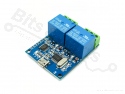 USB board with two relays for switching a power supply up to a maximum of 10A (230VAC/30VDC).
With CH340 USB-to-serial chip (you can download drivers for this if your system does not recognize it yet).
After plugging in, a new COM or TTYS port will appear in your system.
By sending the following hex strings to it (connect at 9600 baud) you can swit... In stock -
Relay with USB control LCUS-1 (single)
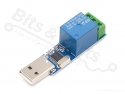 USB relay stick with a 1-channel relay for switching a power supply up to a maximum of 10A (230VAC/30VDC).
With CH340 USB-to-serial chip (you can download drivers for this if your system does not recognize it yet).
After plugging in, a new COM or TTYS port will appear in your system.
By sending the following hex strings to it (connect at 9600 baud)... In stock


 Shipping costs Netherlands




 >
>
