Transistor 2N3904 NPN
Product information:
General purpose NPN transistor 2N3904.
The 2N3904 transistor is a popular NPN-type transistor with impressive characteristics for a wide range of electronic projects. With a maximum current of 200 mA and a maximum voltage of 40 V, this transistor offers reliable performance for both signal amplification and switching control.
With its low collector-emitter voltage (VCE) and high current gain factor (hFE), the 2N3904 is ideal for use in small signal amplifier circuits, audio amplifiers, and switching circuits. Its compact TO-92 package makes it easy to integrate into a variety of electronic designs.
What does an NPN transistor do?
An NPN transistor is a type of bipolar transistor that uses current or voltage to control the flow of current through a circuit. The key feature of an NPN transistor is that current flows from the collector to the emitter when a small current is applied to the base.
What an NPN transistor does:
Switching: When a positive voltage is applied to the base relative to the emitter (more positive than the emitter), the transistor turns 'on', allowing current to flow from the collector to the emitter. This is used in circuits to switch power.
Amplification: A small input current (from the base to the emitter) causes a much larger current to flow through the collector. This makes the NPN transistor useful as an amplifier for electrical signals.
In an NPN transistor, the collector is the positive side, the emitter is the negative side, and the base is the switch that enables current flow between the collector and emitter.
In summary: An NPN transistor allows current to flow from the collector to the emitter when a positive voltage is applied to the base.


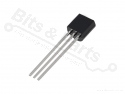 Transistor 2N3906 PNP 200mA 40V
0,10
Transistor 2N3906 PNP 200mA 40V
0,10
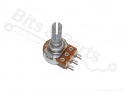 Adjustable Resistance / Potentiometer Axial 100K Ohm Linear ø6mm
0,50
Adjustable Resistance / Potentiometer Axial 100K Ohm Linear ø6mm
0,50
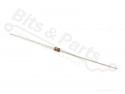 Diode 1N4148
0,10
Diode 1N4148
0,10
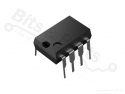 IC TL072ACP OpAmp Dual Bi-fet
1,25
IC TL072ACP OpAmp Dual Bi-fet
1,25
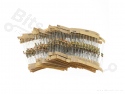 Carbon film resistor set 5% 560 pieces
5,95
Carbon film resistor set 5% 560 pieces
5,95
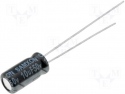 Capacitor 10µF 50V
0,11
Capacitor 10µF 50V
0,11
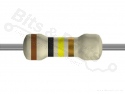 Resistor 100K Ohm 1/4W 5%
0,10
Resistor 100K Ohm 1/4W 5%
0,10
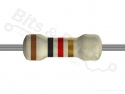 Resistor 1K Ohm 1/4W 5%
0,10
Resistor 1K Ohm 1/4W 5%
0,10
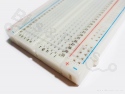 Breadboard 400 pins MB102 - universal experimenting board white
2,95
Breadboard 400 pins MB102 - universal experimenting board white
2,95
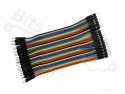 Breadboard jumper cables Dupont 10cm male/male 40PCS
1,40
Breadboard jumper cables Dupont 10cm male/male 40PCS
1,40


 Shipping costs Netherlands




 >
>
